FIA Adjusts Qualifying Energy Rules Ahead of Japanese Grand Prix
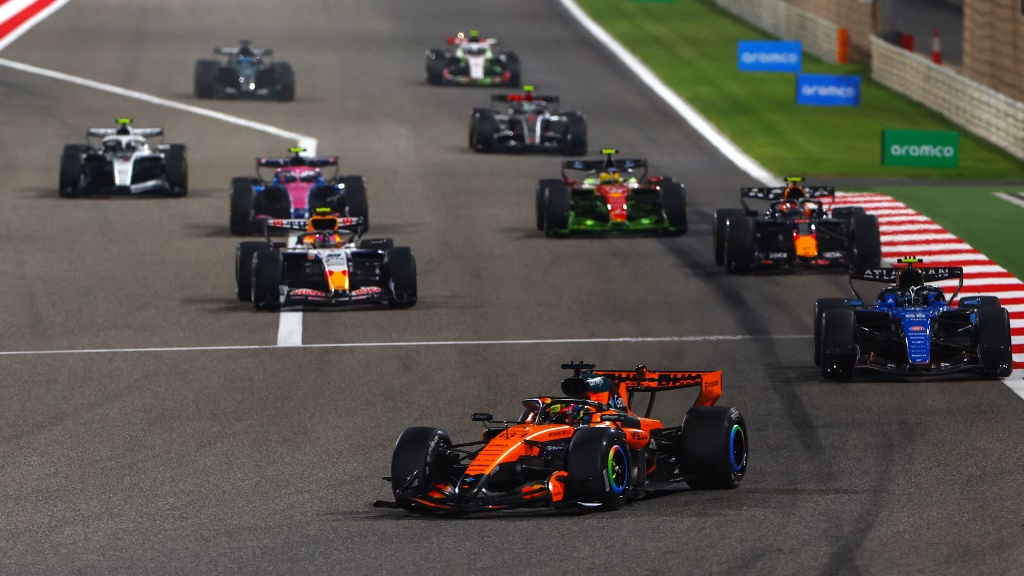
The FIA has announced a small but important adjustment to Formula 1’s energy management rules ahead of this weekend’s Japanese Grand Prix at Suzuka.
Following discussions between the FIA, all 11 Formula 1 teams, and the sport’s power unit manufacturers, the maximum permitted energy recharge during Qualifying has been reduced from 9 megajoules to 8 megajoules.
The change applies specifically to Qualifying at Suzuka and comes after feedback from drivers during the opening two race weekends of the 2026 season.
While the adjustment may sound technical, it could have a noticeable impact on how drivers approach their flying laps.
Why the FIA Made the Change
The 2026 Formula 1 regulations have introduced a new era of power unit and energy management demands.
With more emphasis placed on electrical energy deployment, drivers and teams have had to adapt to a different style of driving — particularly when balancing outright lap time with battery recharge.
After the first two Grands Prix of the season, drivers raised concerns about how Qualifying laps were being affected by energy harvesting.
In simple terms, drivers were spending more time managing battery recharge rather than fully attacking the lap. That included more lifting and coasting, especially on straights, which risked taking away from the traditional Qualifying spectacle.
The FIA said the change is intended to maintain the balance between energy deployment and driver performance.
What Changes for the Drivers?
By reducing the maximum permitted energy recharge from 9MJ to 8MJ, drivers will have to harvest slightly less energy during their Qualifying laps.
That means they should spend less time on part throttle and less time lifting and coasting.
For fans, the goal is simple: Qualifying should feel more like a true performance challenge, where drivers are pushing closer to the limit rather than constantly managing energy recovery.
Suzuka is one of the most demanding circuits on the calendar, with fast corners, technical sections, and very little room for mistakes. A change like this could help keep Qualifying focused on precision, commitment, and outright speed.
Power Unit Manufacturers Agreed Unanimously
The decision was agreed unanimously by Formula 1’s current power unit manufacturers: Mercedes, Ferrari, Red Bull Ford, Audi, and Honda.
That is important because energy management is closely tied to power unit performance. Any change in this area affects how teams use their engines, batteries, and deployment strategies.
The fact that all manufacturers agreed suggests that there was a shared understanding that the early 2026 Qualifying format needed a small refinement.
It also shows that the FIA is willing to make targeted adjustments as the new regulations are tested in real-world racing conditions.
A Normal Part of the 2026 Regulation Reset
The FIA described the first events under the 2026 regulations as operationally successful, but also made it clear that refinements are expected as the new rules continue to bed in.
That is not unusual.
Whenever Formula 1 enters a new regulation era, there is always a learning phase. Teams, drivers, manufacturers, and governing bodies all gather data from the opening races before deciding whether small adjustments are needed.
This change does not suggest that the regulations are failing. Instead, it shows that the FIA is responding to feedback early and trying to protect the quality of the racing product.
Why This Matters for Qualifying
Qualifying has always been one of Formula 1’s purest tests.
It is the moment where drivers have limited time, maximum pressure, and the chance to deliver one perfect lap.
If energy management becomes too dominant, there is a risk that Qualifying becomes less about bravery and precision, and more about calculation.
This adjustment appears designed to prevent that.
By slightly reducing the recharge allowance, the FIA is trying to ensure that drivers can attack their laps more naturally while still working within the demands of the new 2026 power units.
Could More Changes Follow?
The FIA has confirmed that further discussions around energy management are scheduled in the coming weeks.
That means this may not be the final adjustment we see under the new rules.
As teams continue to understand their cars and power units, the FIA may look at additional refinements to make sure the regulations deliver the intended balance between technology, efficiency, and driver skill.
For now, Suzuka will provide an important test case.
Final Thoughts
The FIA’s Qualifying energy adjustment may be small on paper, but it highlights one of the biggest challenges of Formula 1’s new era.
The 2026 regulations are pushing the sport further into advanced hybrid technology, but the racing still needs to feel sharp, fast, and driver-focused.
Reducing the permitted energy recharge from 9MJ to 8MJ is a targeted move aimed at keeping Qualifying exciting and ensuring drivers can push harder when it matters most.
At a circuit like Suzuka, that could make all the difference.


About The Author

Covering Formula 1 news, race analysis, driver stories and the bigger talking points around the sport.
Latest F1 News