Miami GP Penalties Explained: Why Verstappen Kept P5 and Leclerc Dropped to P8
Follow 2026 Season UpdatesFollow updates
The 2026 Miami Grand Prix did not end when Kimi Antonelli crossed the line.
After a chaotic final phase, the stewards still had work to do — and both Max Verstappen and Charles Leclerc were caught up in post-race investigations. Verstappen received a five-second penalty for a pit exit breach, while Leclerc was handed a much heavier 20-second penalty after leaving the track several times with a damaged Ferrari.
The result? Verstappen kept fifth place. Leclerc dropped from sixth on the road to eighth in the final classification.
Why Was Max Verstappen Penalised?
Verstappen’s penalty came from his pit exit during the Miami Grand Prix.
After making an early stop under the Safety Car, the Red Bull driver crossed the solid white line that separates the pit exit from the track. The stewards reviewed the incident after the race and decided that Verstappen had breached Appendix L, Chapter IV, Article 6 c) of the International Sporting Code.
For that, he received the standard five-second time penalty.
On paper, that should have dropped Verstappen from fifth to sixth, behind Leclerc. But because Leclerc was also penalised after the race, Verstappen’s final position did not change.
Why Verstappen Still Kept Fifth
This is the part that may confuse fans at first.
A five-second penalty normally hurts, especially in a close midfield or front-running battle. But Verstappen had enough of a gap to the cars behind once Leclerc’s separate penalty was applied.
Reuters reported that Verstappen retained fifth despite the post-race penalty, while Leclerc was demoted after receiving a 20-second penalty of his own.
So while Verstappen was punished, the final damage was limited.
It is still not ideal for Red Bull. Crossing the pit exit line is a basic error, and on another day it could easily have cost Verstappen a position. But in Miami, Leclerc’s penalty effectively protected Verstappen’s finishing place.
Why Was Charles Leclerc Penalised?
Leclerc’s penalty was more serious because it involved multiple incidents after his late-race mistake.
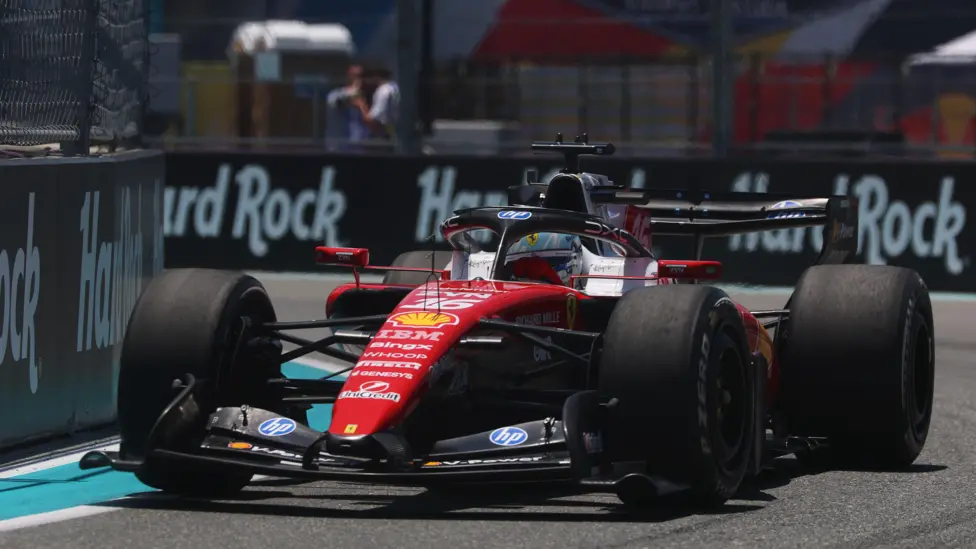
The Ferrari driver spun on the final lap, tapped the wall, and continued with a car that appeared difficult to control through right-hand corners. After that, he was investigated for driving the car in an unsafe condition, leaving the track multiple times and gaining an advantage, and contact with George Russell at the final hairpin.
The stewards eventually gave Leclerc a drive-through penalty for leaving the track several times without a justifiable reason. Because the race had already finished, that drive-through was converted into a 20-second time penalty.
That dropped him from sixth to eighth.
The Key Difference Between the Two Penalties
The difference is simple: Verstappen committed one pit exit infringement. Leclerc’s penalty covered repeated track-limits-style offences after his car was damaged.
The stewards accepted that Leclerc had a mechanical issue after hitting the wall, but ruled that this did not justify cutting chicanes and gaining a lasting advantage. They also decided there was no further action needed for the separate contact with Russell.
That is why Leclerc’s penalty was so much heavier.
For Verstappen, it was a five-second penalty for a defined pit exit breach. For Leclerc, the stewards judged that a drive-through penalty was appropriate, which became 20 seconds after the chequered flag.
How the Penalties Changed the Result
Before the penalties, Leclerc had finished sixth on the road after a messy end to the race.
After the stewards’ decisions, Verstappen stayed fifth, Lewis Hamilton moved up to sixth, Franco Colapinto was promoted to seventh, and Leclerc dropped to eighth. Reuters also reported that Hamilton and Colapinto gained from Leclerc’s demotion.
That is a painful outcome for Ferrari.
Leclerc had been in the podium fight earlier in the race, but a late spin, damage, and the penalty turned what could have been a strong result into a frustrating eighth place finish.
What It Means for Red Bull
For Red Bull, Verstappen’s penalty is annoying but not disastrous.
He started on the front row, spun on the opening lap, dropped down the order, recovered to fifth, and then survived the post-race penalty without losing the position. That is a strange race summary, but in the circumstances, Red Bull will probably take the points.
The bigger concern is that small operational or driving mistakes are still creeping in. If Red Bull want to properly close the gap to Mercedes and McLaren, they cannot afford penalties that put results at risk.
What It Means for Ferrari
For Ferrari, Leclerc’s penalty hurts more.
Not only did it cost him two places, but it also turned a possible recovery finish into another “what could have been” moment. Leclerc admitted after the race that his late mistake was on him, while Sky Sports reported that he described the error as one that put a strong race “in the bin”.
Ferrari had looked competitive in Miami. Leclerc had the pace to be in the podium conversation, and Hamilton still ended up sixth after the penalties were applied.
But once again, Ferrari left a Grand Prix with the feeling that more was possible.
Fact vs Analysis
The facts: Verstappen received a five-second penalty for crossing the pit exit line. Leclerc received a 20-second penalty after repeatedly leaving the track and gaining an advantage. Verstappen kept fifth, while Leclerc dropped to eighth.
The analysis: Verstappen’s penalty was a small mistake with limited consequences. Leclerc’s penalty was far more damaging because it came after a late-race error that already cost Ferrari track position.
Final Thoughts
The Miami GP penalties are a good reminder that Formula 1 races are not always settled at the chequered flag.
Verstappen was punished, but escaped with fifth place. Leclerc was punished harder, and Ferrari paid the price in the final classification.
For Red Bull, it was a warning. For Ferrari, it was a missed opportunity.
And for fans, it added one more layer to a Miami Grand Prix that already had plenty of chaos, strategy, and late-race drama.


About The Author

Covering Formula 1 news, race analysis, driver stories and the bigger talking points around the sport.
Latest F1 News