Haas F1 Team
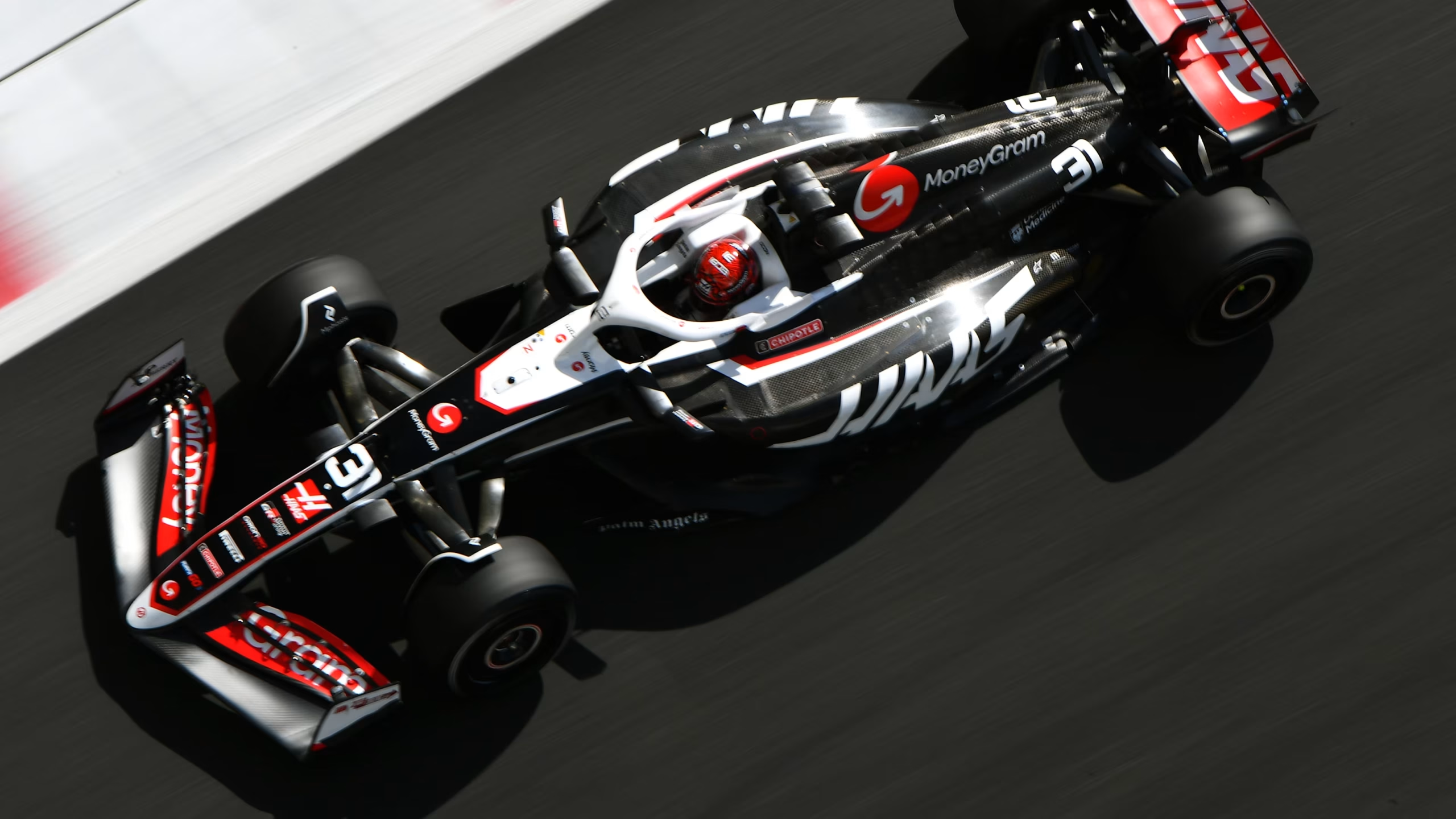
TEAM OVERVIEW
Haas F1 Team is Formula 1’s youngest long-term constructor and the most successful American-owned team the sport has seen in the modern era. Founded by Gene Haas, the team entered Formula 1 in 2016 with a radically different philosophy — prioritising efficiency, partnerships, and sustainability over traditional expansion models.
Haas represents pragmatism, resilience, and realism. Rather than attempting to mirror legacy teams, Haas carved its own path — proving that a lean, intelligently structured operation could survive and compete in Formula 1’s most demanding environment.
THE ORIGINS OF HAAS IN MOTORSPORT
Gene Haas’ motorsport roots predate Formula 1. Through NASCAR and other racing ventures, Haas developed a strong understanding of competition, cost control, and operational efficiency.
When Haas announced its entry into Formula 1, it did so with a clear intention: challenge the assumption that success required massive infrastructure and manufacturer backing.
Haas would not attempt to outspend rivals — it would out-optimise them.
HAAS’ ENTRY INTO FORMULA 1
Haas joined Formula 1 in 2016, becoming the first new constructor in years to successfully establish itself without immediate collapse. Its entry was built around a unique model that leveraged technical partnerships while maintaining constructor status.
This approach allowed Haas to:
- Reduce development costs
- Accelerate competitiveness
- Focus resources on performance-critical areas
The result was one of the most impressive debut seasons in modern Formula 1 history.
EARLY SUCCESS AND VALIDATION
Haas’ early seasons delivered results that exceeded expectations. Points finishes arrived quickly, validating the team’s unconventional approach and silencing early sceptics.
The team became known for:
- Punching above its weight
- Strong race-day execution
- Efficient use of resources
- Willingness to challenge established midfield teams
Haas proved that Formula 1 success did not require tradition — only clarity and discipline.
THE PEAK YEARS AND LIMITATIONS
At its competitive peak, Haas emerged as a regular points contender and occasional challenger for best-of-the-rest honours. However, the team’s lean structure also exposed limitations.
As Formula 1 became increasingly complex, Haas faced challenges in:
- Development depth
- Adaptability to rapid regulation shifts
- Balancing cost efficiency with performance evolution
These limitations highlighted the fine line between efficiency and competitiveness.
PERIODS OF STRUGGLE AND SURVIVAL
Haas’ most difficult periods tested the team’s very existence. Financial pressures, technical missteps, and global economic disruption pushed the operation to its limits.
Rather than withdraw, Haas chose survival over spectacle — restructuring operations, refocusing strategy, and committing to long-term stability.
This resilience became a defining chapter in the team’s identity.
CHAMPIONSHIPS & ACHIEVEMENTS
Haas’ achievements are measured through sustainability rather than silverware:
- Constructors’ Championships: None
- Drivers’ Championships: None
- Race Wins: None
- Podiums: None
- Pole Positions: None
For Haas, staying on the grid is itself a significant accomplishment.
NOTABLE HAAS DRIVERS
Haas has fielded a diverse mix of experience and youth:
- Romain Grosjean – Central to Haas’ early competitiveness
- Kevin Magnussen – Aggressive racer and team benchmark
- Esteban Gutiérrez – Early development contributor
- Nico Hülkenberg – Experience and technical feedback
Each driver played a role in Haas’ evolution.
TECHNICAL PHILOSOPHY
Haas’ technical philosophy is grounded in pragmatism. The team prioritises:
- Efficient car design
- Focused development paths
- Strategic technical partnerships
- Cost-controlled performance gains
Rather than pushing radical innovation, Haas focuses on extracting maximum value from every decision.
TEAM CULTURE AND IDENTITY
Haas’ culture is defined by:
- Realism over romanticism
- Efficiency over excess
- Survival through discipline
- Commitment to competition
The team exists to race — not to impress with scale.
About The Author

Covering Formula 1 news, race analysis, driver stories and the bigger talking points around the sport.
Latest F1 News