F1 ADUO Explained: The FIA Rule That Could Shape the 2026 Engine Battle
Follow 2026 F1 regulations UpdatesFollow updates
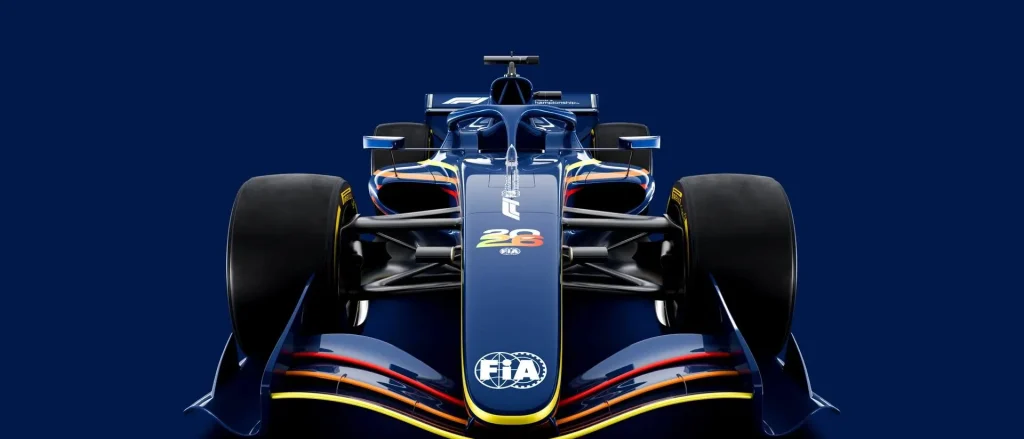
Formula 1’s 2026 regulations were always going to create winners and losers. New power units, more electrical deployment, sustainable fuel, no MGU-H, active aero, and a very different way of racing all arrived at once.
But what happens if one engine manufacturer gets it badly wrong?
That is where ADUO, or Additional Development and Upgrade Opportunities, comes in. It is one of the most important technical mechanisms in the 2026 Formula 1 rulebook, and it could have a major say in how competitive the grid stays over the next few seasons.
What is ADUO in Formula 1?
ADUO is a mechanism in the 2026 Formula 1 Technical Regulations that allows power unit manufacturers to make extra upgrades to their homologated engines if they meet specific FIA criteria.
In simple terms, if an engine manufacturer is behind the best-performing internal combustion engine by enough of a margin, the FIA can grant that manufacturer extra development opportunities to help close the gap. The system will apply across defined periods from 2026 to 2030.
The key point is that ADUO is focused on the ICE, or internal combustion engine, side of the power unit. That means it does not measure the full power unit picture on its own, because the hybrid system still plays a major role in overall performance.
That distinction matters.
A team could have issues with energy deployment, cooling, reliability, or drivability, but ADUO is specifically triggered by the FIA’s ICE Performance Index.
Why the FIA created ADUO
The 2026 rules were designed to bring in a new era of Formula 1 power units. F1 moved to new hybrid power units, removed the MGU-H, increased the importance of electrical power, and switched to advanced sustainable fuels. Formula 1 also attracted a wider power unit mix, including Mercedes, Ferrari, Red Bull-Ford, Honda, and Audi.
That is exciting, but it also creates risk.
Whenever regulations change this dramatically, one manufacturer can miss the target. If that happens, the teams using that engine could be trapped at the back for years, even if their chassis is good.
ADUO exists to prevent the 2026 era from becoming a long-term engine mismatch.
The FIA’s goal is not to make everyone equal overnight. It is to stop a manufacturer from being stuck so far behind that its teams have no realistic route back into the fight.
This is not Balance of Performance
This is the part the FIA is clearly trying to stress.
ADUO does not give a manufacturer extra fuel flow, less weight, or an artificial power boost. FIA Single Seater Director Nikolas Tombazis described it as a cost cap relief mechanism, not a Balance of Performance system.
That is important because Formula 1 fans are usually very sensitive to anything that sounds like performance equalisation.
F1 is meant to be a development championship. If one manufacturer builds the best engine, it should be rewarded. ADUO does not remove that principle.
Instead, it gives a struggling manufacturer more financial and technical room to work on its power unit. They still have to find the performance themselves.
How far behind does a manufacturer need to be?
The FIA threshold starts at 2% behind the best-performing ICE.
If a manufacturer’s ICE Performance Index is at least 2% below the best engine, it can become eligible for ADUO support. The greater the deficit, the more support becomes available.
The FIA’s financial allowances are structured in bands:
- 2–4% behind: up to $3 million
- 4–6% behind: up to $4.65 million
- 6–8% behind: up to $6.35 million
- 8–10% behind: up to $8 million
- 10% or more behind: up to $11 million, with a possible extra $8 million brought forward from future cost cap periods in 2026 only
That final category is the major one. If a manufacturer is more than 10% behind, the FIA clearly recognises that the problem is not small.
What upgrades are allowed under ADUO?
Although ADUO is triggered by ICE performance, the upgrades are not limited only to the combustion engine itself.
According to the FIA, permitted upgrade areas can include parts of the ICE, exhaust system, turbo, waste gate or pop-off systems, electrical components and sensors, ERS-related systems, MGU-K, control electronics, cooling systems, hydraulic functions, fluids, and ballast.
That gives manufacturers a meaningful development window.
It also shows why ADUO could become strategically important. A power unit problem is rarely just one single part. It can be about how the combustion engine, hybrid system, cooling demands and installation all work together.
When will the first ADUO decision happen?
The first ADUO assessment period was originally intended to cover the first six races of the 2026 season. However, the FIA has adjusted that first period because of calendar disruption.
The first period now covers the opening five races: Australia, China, Japan, Miami and Canada. The FIA says the results will be communicated no later than two weeks after the Canadian Grand Prix.
The second period will cover Monaco to Hungary, while the third period will run from the Netherlands to Mexico City.
That means the Canadian Grand Prix could become a very important reference point for power unit politics.
Not just because of the race result, but because of what the FIA data says afterwards.
Why ADUO could matter for the 2026 season
The biggest impact of ADUO is not just technical. It is competitive.
If one power unit supplier is clearly behind, the teams using that engine could spend the season fighting with one hand tied behind their back. In a cost cap era, catching up is not as simple as throwing unlimited money at the problem.
ADUO gives those manufacturers a legal route to respond.
That could matter for teams like Aston Martin with Honda, Audi with its own new works power unit, or any manufacturer that finds itself outside the competitive window.
It does not guarantee a comeback. It simply gives them a better chance of building one.
The big debate: fair help or too much intervention?
There will be two sides to the ADUO debate.
One side will argue that it is sensible. Formula 1 does not benefit if one engine manufacturer gets buried for years. Fans want close racing, and teams should not be punished forever for an early regulation miss.
The other side will argue that F1 should reward excellence. If a manufacturer has done a better job, why should its rivals receive extra development allowances?
Both arguments are valid.
The FIA’s challenge is to keep ADUO narrow enough that it protects competition without making success feel punished. That balance will define how fans and teams react when the first ADUO decisions arrive.
What happens if a manufacturer qualifies?
If a manufacturer qualifies, it can receive extra homologation upgrade opportunities.
A manufacturer that is between 2% and 4% behind can receive one additional upgrade in the current season and one for the following season. If it is at least 4% behind, it can receive two additional upgrades in the current season and two more for the following season.
However, these upgrades are not simply stockpiled forever. Unused upgrades for a specified season are forfeited if they are not introduced by the final round of that season.
That means manufacturers will still need to act quickly and intelligently.
Having an extra opportunity is useful. Using it properly is the hard part.
Why fans should care about ADUO
ADUO might sound like a dry technical regulation, but it could influence the competitive order more than people realise.
If one manufacturer is struggling, ADUO could help keep its teams in the development race. If the FIA applies it carefully, it could prevent the 2026 engine era from becoming too spread out too quickly.
But it also adds another layer of politics.
Every manufacturer will be watching the FIA’s calculations closely. Every team will want clarity. And every fan will want to know whether the system is helping competition or interfering with it.
That is why ADUO is worth understanding now.
It might become one of the most important acronyms of the 2026 Formula 1 season.
Final thoughts
ADUO is not a magic fix, and it is not meant to be.
It will not turn a struggling power unit into the best engine overnight. It will not hand out artificial performance. It will not erase the advantage of a manufacturer that has done a better job.
But it could stop the 2026 engine rules from becoming too punishing too quickly.
For Formula 1, that matters. The new era needs technical freedom, but it also needs competition. ADUO is the FIA’s attempt to protect both.
Whether it works will depend on how fairly, transparently and consistently it is applied.


About The Author

Covering Formula 1 news, race analysis, driver stories and the bigger talking points around the sport.
Latest F1 News