2025 F1 Rule Overhaul & Pre-Season Testing: What’s Changing & Why It Matters!
Follow 2025 Season UpdatesFollow updates
F1 2025 Rule Changes Explained: What’s New?
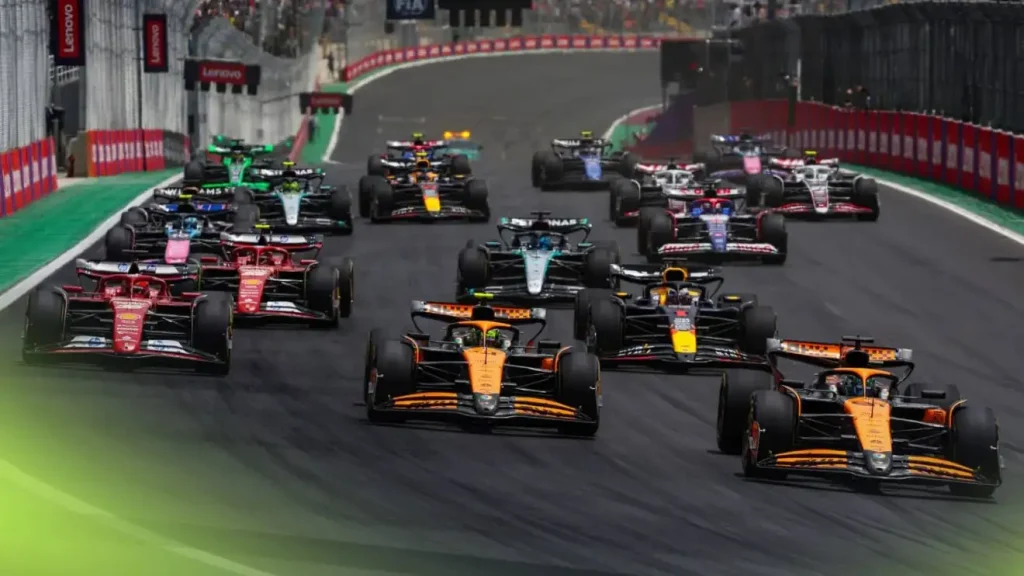
With the F1 2025 rule changes officially announced, teams are scrambling to adapt. From banning “mini-DRS” tricks to doubling rookie testing sessions, these updates will impact race strategies and team development plans as pre-season testing kicks off this weekend.
And if you’re craving some on-track action, you won’t have to wait long—pre-season testing starts this weekend, giving teams their first proper chance to see if all these changes have made their lives easier or significantly harder.
1. No More Fastest Lap Point: Sorry, Midfield Gamblers
Say goodbye to those last-minute pit stops for fresh softs. The extra point for the fastest lap has been scrapped, ending the occasional midfield drama where a team with nothing to lose would throw on new tires just to swipe an extra point from the big guns. Will this make races more exciting or just remove a tiny subplot of strategic chaos? Time will tell.
2. How the F1 2025 Rule Changes Affect Rookie Testing
Teams are now required to give rookies at least four FP1 sessions per season—double the previous requirement. While this is great news for young drivers, it’s a mild headache for teams who’d rather fine-tune their setups than babysit a newcomer. Expect creative interpretations of “rookie” status as teams try to minimize disruption.
3. The Rear Wing Crackdown: Bye-Bye “Mini-DRS” Tricks
FIA has tightened the rules on rear wings and Drag Reduction System (DRS) deployments, because of course they have. The key changes?
- Rear wings can now only have two states: open and closed.
- The sneaky “mini-DRS” tricks—where the top elements of the wing subtly tilt at speed to reduce drag—are now banned.
- Stricter rear wing slot gap testing will be introduced, increasing the applied load from 10 newtons to 30 newtons to limit unwanted flexing.
If these regulations sound overly technical, just know that teams will now have fewer ways to bend the laws of aerodynamics to their advantage. And of course, expect clever engineers to find new ones.
4. How the F1 2025 Rule Changes are Cooling Down Hot Drivers (Literally, Not Figuratively)
After the 2023 Qatar Grand Prix turned into an impromptu survival challenge, new regulations mandate driver cooling systems for races expected to exceed 31°C. Because, apparently, nearly passing out in the cockpit wasn’t enough evidence that this was a necessary change.
5. New Testing Restrictions & Simulator Use
Formula 1’s Testing of Previous Cars (TPC) has been further restricted, because why let drivers get comfortable in an F1 car when they can just use a simulator instead? Here’s what’s changed:
- Teams can still conduct up to 20 days of TPC running per year, but…
- Race drivers are now limited to four days of testing and can’t exceed 1,000 km of running in total.
- The rule only applies to TPC track time (cars at least two seasons old) and does not affect tyre testing or promotional running with current machinery.
- Teams can only run one TPC car at a time, meaning no fancy multi-car data-gathering tricks.
Hope you like virtual laps, because real-world seat time is dwindling.
6. Qualifying Contingency Plan: Rain = Hope You’ve Scored Some Points
If qualifying is canceled due to extreme weather (or whatever unexpected chaos F1 throws up), the starting grid will now be determined by championship standings. So if your car performs better in wet conditions and you were banking on a surprise pole—sorry, better luck next time.
7. End-of-Season Testing: Mule Cars Incoming
The Abu Dhabi post-season test is getting a revamp due to the looming 2026 regulation changes. While the usual Young Driver Test remains (only open to drivers with fewer than two race starts), the second car must now be a mule car—adapted for testing the 2026-spec Pirelli tires.
- The 2026 tires will have different dimensions and characteristics compared to the current rubber.
- Teams can use either their 2025 car or any previous four-year-old car, as long as it’s been modified for proper testing.
So, while teams are still scrambling to perfect their 2025 setups, they’ll also need to start preparing for the next major shake-up. Because why not throw in more variables?
Final Thoughts: Will These Changes Actually Matter?
Some of these rules make sense (rookie running, cooling systems), while others feel like a game of regulatory whack-a-mole—teams find a loophole, FIA patches it, teams find another one. It’s the endless cycle of Formula 1.
And with pre-season testing kicking off this weekend, teams will finally get the chance to see if their offseason work has paid off—or if they’ll be spending the next few months in damage-control mode.
With 2025 shaping up to be another year of relentless fine-tuning, the real question remains: Will this actually improve the racing, or is it just another chapter in the sport’s long tradition of overcomplicating things?
One thing’s for sure—engineers, strategists, and rulebook analysts are going to have a busy year. And as always, the fans will be left to watch, question, and enjoy the inevitable controversy.
For the official FIA document on these updates, visit the Formula 1 website.
If you want to learn more about Formula 1, check out our F1 Explained section.


About The Author

Covering Formula 1 news, race analysis, driver stories and the bigger talking points around the sport.
Latest F1 News