Mercedes Unveils the W16: A Formula 1 First in Sustainable Carbon Fibre
Follow Mercedes UpdatesFollow updates
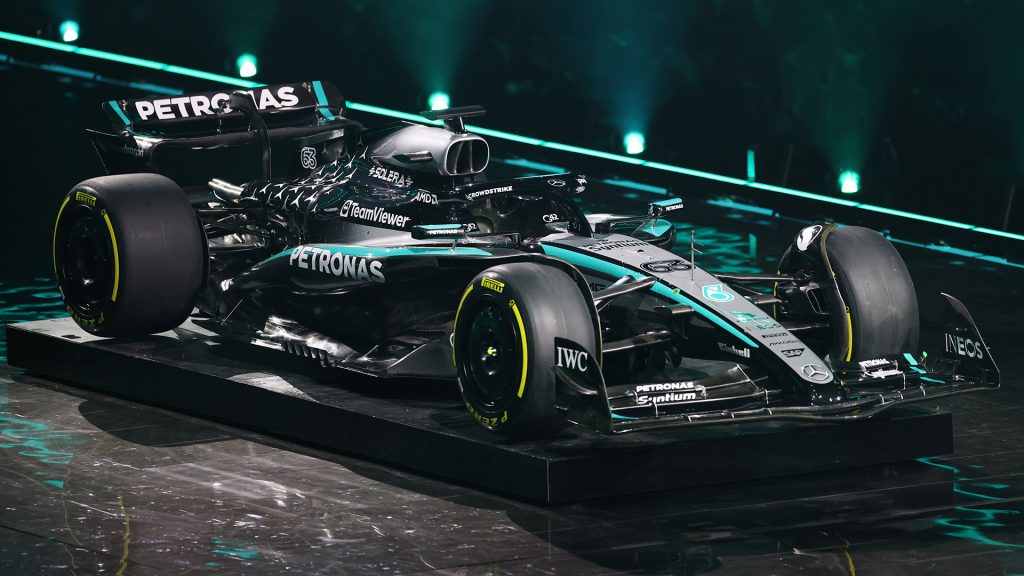
Mercedes have announced that their 2025 Formula 1 challenger, the W16, will be the first F1 car to use innovative sustainable carbon fibre composites. That’s right—while Red Bull is busy figuring out how to keep Max Verstappen entertained and Ferrari is perfecting the art of “almost winning,” Mercedes is making history by changing the very fabric of their race car—literally.
Carbon fibre composites make up about 75% of an F1 car’s materials, playing a key role in both performance and safety. But here’s the catch: producing traditional carbon fibre isn’t exactly eco-friendly. So, in their quest for both speed and sustainability, Mercedes is tackling this challenge head-on. Lewis Hamilton’s vegan diet? Check. A greener F1 car? Double check.
What’s Actually Changing?
For the W16, Mercedes is working on making both the fibres and the resin system more sustainable. Because let’s face it, half-measures won’t do in a sport where milliseconds matter and engineers would probably optimize the airflow of a birthday candle if given the chance.
This project isn’t a simple garage DIY—each carbon fibre composite component involves up to eight different suppliers before it even gets bolted onto the car. And let’s not forget, F1 parts undergo more testing than a university student cramming for finals, so expect Mercedes to run these new materials through the ringer before they hit the track.
Sustainability Meets Speed—But Will It Work?
Mercedes insists that the new sustainable composites will perform just as well as their traditional counterparts. But let’s be honest, we can already hear the inevitable “Is it slowing us down?” radio messages. (We’re looking at you, George Russell.)
Still, it’s all part of a bigger goal: Mercedes wants to hit Net Zero across all scopes by 2040. Given their track record of fine-tuning everything to perfection, don’t be surprised if the W16 ends up not just being fast, but also the first race car with an actual environmental conscience.
Beyond the Track—What’s Next?
This breakthrough isn’t just good news for F1—it could influence industries like aviation, aerospace, and high-performance fabrics. That’s right: in a few years, your next suitcase might be made of the same material as Lewis Hamilton’s front wing.
Team Principal Toto Wolff weighed in on the matter, stating:
“When you combine performance and innovation, you create progress. I am proud to lead a team of problem solvers who are committed to driving sustainable change.”
In classic Wolff fashion, he’s probably already strategizing how to turn this into a competitive advantage—because let’s be real, if sustainability makes a car go faster, Red Bull and Ferrari will be copying it faster than you can say “flexi floor.”
Alice Ashpitel, Mercedes’ Head of Sustainability, added:
“Leadership must be driven by innovation, and our team’s efforts in this space are the latest demonstration of our ambition to become one of the world’s most sustainable global sports teams.”
Translation: Mercedes isn’t just going green for show—they actually mean business.
Final Thoughts
Mercedes is proving that sustainability and speed don’t have to be enemies. Will the W16 be a title-winning, planet-saving beast, or will sustainable carbon fibre prove to be just another unpredictable variable in the F1 development war?
One thing’s for sure: if anyone can pull it off, it’s Mercedes. And if they win a championship with it? Well, expect Christian Horner to suddenly become an environmentalist overnight.


About The Author

Covering Formula 1 news, race analysis, driver stories and the bigger talking points around the sport.
Latest F1 News