Red Bull Chief Designer Craig Skinner Leaves Team Ahead of 2026 Season Opener
Follow Red Bull Racing UpdatesFollow updates
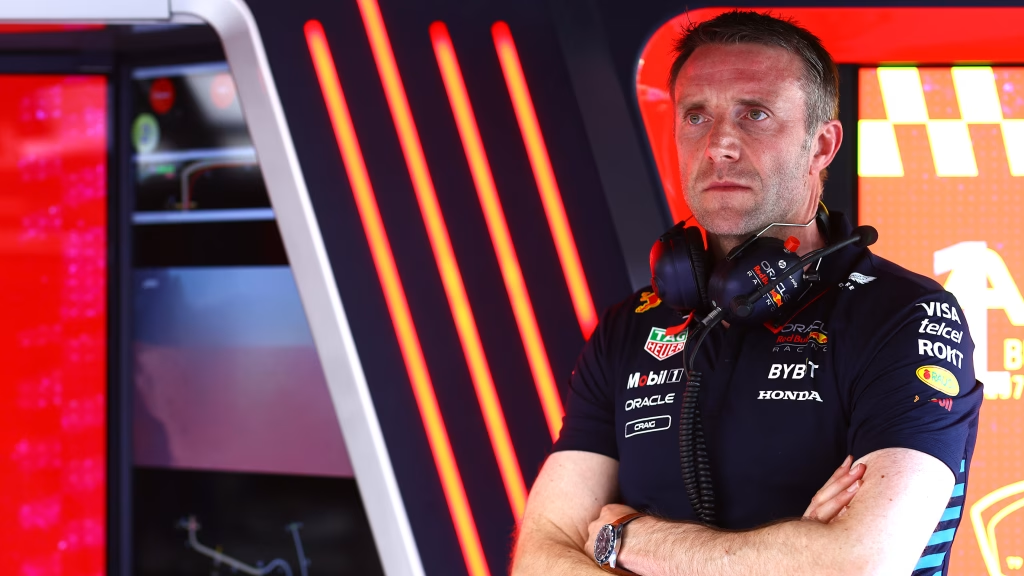
Red Bull have confirmed that Chief Designer Craig Skinner has left the Formula 1 team with immediate effect, bringing an end to a long and highly successful spell with the Milton Keynes-based outfit.
Skinner joined Red Bull in 2006 and became an important figure within the team’s technical structure, working closely over the years with Adrian Newey and Pierre Wache.
His departure comes at a significant time for Red Bull, with Formula 1 entering a new era of regulations in 2026 and the team preparing for the opening race of the season in Australia.
A Long-Serving Figure in Red Bull’s Success
Skinner’s time at Red Bull covered some of the most successful periods in the team’s history.
He was part of the operation during Red Bull’s rise into a championship-winning force and later played a key role during the team’s dominant run with Max Verstappen, where they claimed consecutive world titles between 2021 and 2024.
That makes his exit more than just another staffing change.
For a team built on technical excellence and stability, losing a senior design figure adds another layer of intrigue to Red Bull’s current direction.
Red Bull Confirm Skinner’s Exit
In a statement, Red Bull confirmed the news and paid tribute to Skinner’s contribution.
The team said:
“After 20 years with the team, Craig Skinner, our Chief Designer, will be leaving the Red Bull Technology team.”
Red Bull added that Skinner had been an integral part of the team’s success and thanked him for his commitment and hard work over nearly two decades.
At this stage, it remains unclear what Skinner’s next move will be.
His role is expected to be covered internally on an interim basis.
Another Technical Change for Red Bull
Skinner’s departure follows a period of major change within Red Bull’s technical structure.
Adrian Newey has already left the team to join Aston Martin, while Pierre Wache continues to lead Red Bull’s technical division.
Although Red Bull remain one of Formula 1’s strongest operations, the loss of experienced senior figures naturally raises questions about how the team will manage its long-term technical direction.
The timing is also important.
With new regulations, new cars, and Red Bull now running its first Formula 1 power unit in partnership with Ford, 2026 is one of the biggest transition years the team has faced.
Strong Start Despite the Change
Despite the off-track movement, Red Bull have started their 2026 campaign in encouraging fashion.
Their new Red Bull-Ford power unit has reportedly shown strong reliability during early running, while its deployment performance has attracted attention.
That will be a major positive for the team as they continue preparations ahead of the Australian Grand Prix.
Red Bull also ended last season strongly under Laurent Mekies, with a late run of upgrades helping Verstappen win six of the final nine races and take the championship fight all the way to the season finale.
The challenge now is whether they can carry that momentum into the new era while also managing the impact of internal changes.
What This Means for Red Bull
In the short term, Red Bull appear to have a plan in place, with Skinner’s role expected to be handled internally.
But in Formula 1, continuity matters.
The departure of a long-serving Chief Designer during a regulation reset is something worth watching closely, especially when the margins between teams are expected to be tight.
Red Bull’s strength has always been its ability to adapt, develop quickly, and respond under pressure.
The 2026 season will now test that ability once again — not only on track, but inside the factory too.
Final Thoughts
Craig Skinner’s exit marks the end of an important chapter at Red Bull.
After nearly 20 years with the team, his departure removes another experienced figure from one of Formula 1’s most successful technical groups.
Red Bull may still be well positioned heading into the new season, but with major regulation changes, a new power unit project, and continued technical restructuring, the spotlight will be firmly on how the team responds.
For now, Red Bull remain a front-running force — but this is another reminder that even the strongest teams are not standing still.
About The Author

Covering Formula 1 news, race analysis, driver stories and the bigger talking points around the sport.
Latest F1 News