Why Red Bull Are Struggling — And Why Miami Could Change Everything
Follow 2026 Season UpdatesFollow updates
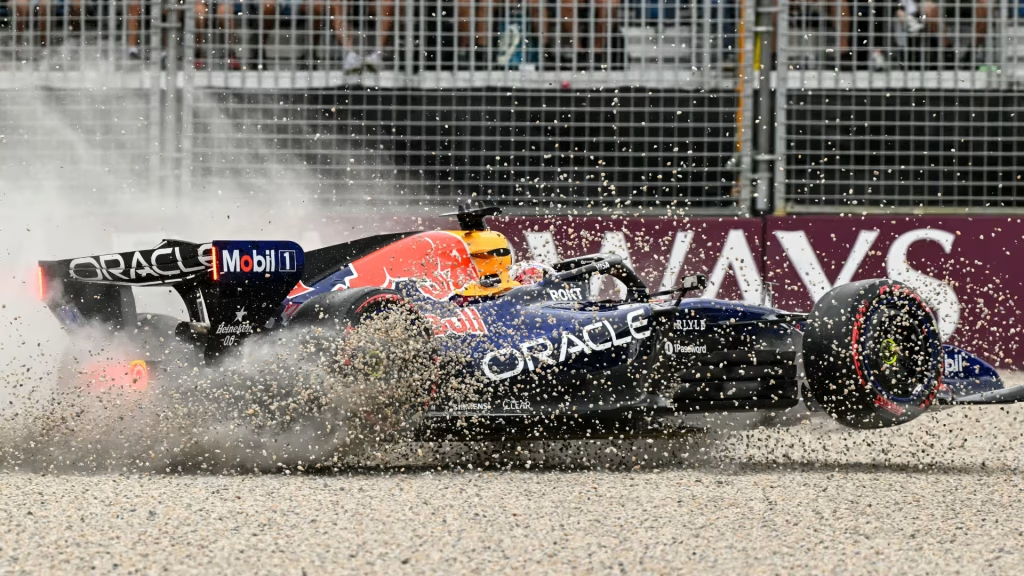
Red Bull’s difficult start to the 2026 Formula 1 season has become one of the biggest talking points of the year so far.
For a team that dominated so much of the previous era, seeing Max Verstappen fighting outside the podium places and Red Bull sitting behind several midfield rivals feels strange. After the first three rounds, Formula 1 reported that Red Bull had scored just 16 points, leaving them sixth in the standings behind Haas and Alpine. Mercedes, by comparison, had already reached 135 points.
That is not just a slow start. That is a serious warning sign.
But Red Bull’s problems are unlikely to come from one single issue. Their struggles appear to be a combination of the new 2026 technical regulations, a difficult RB22 operating window, reliability concerns, a late 2025 development push, and major structural changes inside the team.
The big question now is whether the April break has given them enough time to respond — and whether Miami could be the first sign of a Red Bull fightback.
The 2026 rules have changed everything
The 2026 Formula 1 regulations are not just a small update. This is one of the biggest technical resets the sport has seen in years.
Formula 1’s own technical explainer describes the new era as an “entirely new chassis philosophy”, with lighter and more agile cars, a new aerodynamic concept, and a major power unit change happening at the same time. F1 also noted that the combination of new power units and new aerodynamics makes this reset especially significant because everyone is effectively starting again.
That matters for Red Bull because their previous strength was built around a very stable aerodynamic platform. Their best cars gave Verstappen a strong front end, a planted rear, and the confidence to attack corner entry in a way very few drivers could match.
The RB22 does not appear to be giving him that same confidence.
Under the new rules, teams are no longer just chasing downforce in the old way. They need to balance lighter cars, narrower tyres, different floors, active aero behaviour, energy harvesting, deployment, cooling, and reliability. F1’s 2026 rule breakdown notes that the cars are shorter, narrower, lighter, and have smaller tyres, with ground effect no longer as dominant as it was in the previous era.
That means a team can have strong peak performance in one area but still struggle overall if the car is unpredictable. Right now, that seems to be Red Bull’s problem.
The RB22 looks difficult to drive
The biggest issue for Red Bull is not just that the RB22 is slower than expected. It is that the car looks difficult to understand.
In Australia, Isack Hadjar impressed by qualifying third, but Verstappen made an uncharacteristic mistake in qualifying when the car snapped away from him. On race day, Hadjar retired with an engine issue, while Verstappen recovered to sixth. China was even worse, with both drivers struggling throughout the weekend and Verstappen eventually retiring with more engine trouble. In Japan, Verstappen could only finish eighth.
That tells us something important.
This does not look like a car that is simply missing a little top speed or a little downforce. It looks like a car that is difficult to place in the right window.
Verstappen was blunt after qualifying in China, describing the RB22 as “completely undriveable” and saying every lap felt like survival. He also said Red Bull had changed a lot on the car, but that it made “zero difference”.
That kind of comment is significant because it suggests the team are not only lacking performance — they are struggling to understand how to unlock it.
When a car is predictable, drivers can work around its weaknesses. When a car gives mixed signals, every set-up change becomes harder to judge. The driver loses confidence, the engineers chase symptoms, and the team can spend race weekends trying to survive instead of building performance.
The new Red Bull Ford power unit is not the whole problem
Before the season started, many expected Red Bull’s biggest concern to be its new power unit.
That would have made sense. For the first time, Red Bull entered a season with its own in-house power unit project in partnership with Ford. Building an engine programme from scratch is a massive challenge, especially when Mercedes, Ferrari, Audi, and Honda-backed Aston Martin all entered the new era with manufacturer experience behind them.
But the power unit has not been a complete disaster. In fact, during pre-season testing, Formula 1 reported that Red Bull’s new Ford-badged power unit impressed the paddock, particularly with its energy deployment on the straights.
That makes Red Bull’s situation more complicated.
There have been reliability issues, and that cannot be ignored. Hadjar retired in Australia with an engine issue, and Verstappen retired in China with more engine trouble.
But the bigger picture suggests the power unit may not be Red Bull’s main weakness. F1 TV commentator Alex Jacques argued that many would have expected the engine to be Red Bull’s problem, but that the Red Bull Ford power unit actually deserves praise.
If that is the case, then Red Bull’s bigger issue may be how the full package works together.
In 2026, the engine, electrical deployment, aero platform, and chassis balance are all heavily connected. A strong power unit cannot fully save a car that is unstable, inconsistent, or difficult to set up.
Red Bull may be paying the price for chasing 2025
Another major factor is Red Bull’s late 2025 title push.
Red Bull and Verstappen fought deep into last season, and Formula 1 has suggested that the team may now be paying the price for pushing so hard instead of switching focus earlier to 2026.
Laurent Mekies has also acknowledged that Red Bull faced a difficult decision: keep fighting for Verstappen’s fifth title in 2025 or turn the page earlier and focus on the new regulations. Red Bull chose to keep fighting, even though they knew it could hurt their 2026 preparation.
That is the brutal reality of Formula 1.
If you stop developing too early, you might throw away a championship. But if you keep developing too long, you risk arriving late to the next era.
With the size of the 2026 regulation reset, even a few months of delayed focus can matter. Mercedes appear to have started the new era with a much stronger package. Ferrari and McLaren also look better placed than Red Bull. That leaves Red Bull trying to solve problems while the season is already moving.
The structural changes at Red Bull cannot be ignored
This is also not the same Red Bull structure that built the team’s most dominant cars.
Adrian Newey’s departure was the first major shift. Red Bull confirmed in 2024 that Newey would leave his Chief Technical Officer role in the first quarter of 2025, ending a period in which he played a central role in Red Bull’s rise into one of Formula 1’s most successful teams.
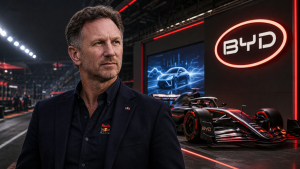
Christian Horner’s exit then changed the leadership picture even further. Reuters reported that Red Bull removed Horner from his role in July 2025 and appointed Laurent Mekies as CEO of Red Bull Racing. Horner had led the team since Red Bull entered F1 as a constructor in 2005.
More recently, Formula 1 reported that several key figures had left Red Bull in recent years, including Horner, Helmut Marko, Jonathan Wheatley, Rob Marshall, Will Courtenay, and Craig Skinner.
One departure does not break a team. But several major exits over a relatively short period can change how quickly a team reacts.
Red Bull’s old strength was not just one person. It was the complete system: design, operations, race execution, strategy, driver feedback, and leadership all working together. When that structure changes, especially during a regulation reset, it can take time for the new version of the team to operate at the same level.
That does not mean Red Bull are collapsing. It means they are trying to rebuild while also trying to win.
The technical restructure shows Red Bull know they need to respond
Red Bull have already started adjusting their technical structure.
In April, the team announced that Ben Waterhouse would take on an expanded role as Chief Performance and Design Engineer, with responsibility across both Design and Vehicle Performance. Andrea Landi will also join from July 1 as Head of Performance, reporting to Waterhouse. Red Bull said the changes were designed to strengthen integration and accelerate the development of competitive solutions.
That is important because Red Bull’s biggest problem may be the link between design and performance.
It is one thing to design a car that looks strong in simulation. It is another thing to make that car predictable on track, across different circuits, fuel loads, tyre compounds, weather conditions, and active aero states.
By bringing design and vehicle performance closer together, Red Bull appear to be trying to close the gap between what the factory expects and what Verstappen and Hadjar are actually feeling in the car.
That kind of restructure will not magically fix the RB22 overnight. But it can help the team stop chasing the wrong answers.
Why the April break may have helped Red Bull
The unexpected April break may have arrived at exactly the right time for Red Bull.
Formula 1 confirmed in March that the Bahrain and Saudi Arabian Grands Prix would not take place in April because of the ongoing situation in the Middle East. F1 also confirmed that no replacement races would be added in April, creating a rare five-week break early in the season.
For most teams, that gap was useful. For Red Bull, it may have been essential.
After Japan, Mekies said Red Bull had learned more about the car’s limitations and now had “a few weeks” to try to find fixes. Crucially, he also admitted there was not just one area causing Red Bull’s difficulties and that the team needed to work on all areas.
That is exactly why the break matters.
During a normal race-to-race schedule, teams do not have much time to step back and separate real problems from symptoms. The April gap gave Red Bull time to go through data, simulator work, reliability analysis, aerodynamic correlation, and set-up direction without immediately rushing into another race weekend.
It also gave them time to evaluate whether the RB22’s issues are coming from the aero platform, active aero transition, ride-height sensitivity, tyre behaviour, energy deployment, cooling demands, or a combination of everything.
That kind of understanding is vital. If Red Bull simply add parts without understanding the root problem, they risk making the car faster in theory but still difficult to drive in reality.
Miami could be the first real test of Red Bull’s recovery
Miami now becomes a very important weekend for Red Bull.
Reuters reported that Formula 1 returns in Miami after the forced April break with rule tweaks and car upgrades adding a fresh twist. The report also noted that McLaren, Ferrari, and Red Bull have all been pushing to bring performance as they try to close the gap to Mercedes.
That does not guarantee Red Bull will suddenly fight for victory. But it does mean Miami could give us the first indication of whether the April work has helped.
There is another small advantage too. Formula 1 confirmed that Miami’s only practice session has been extended to 90 minutes. That change was made because of the long break, recent technical and regulatory adjustments, and the fact that Miami is a Sprint weekend with reduced practice time.
For Red Bull, that extra 30 minutes could be extremely valuable.
On a normal Sprint weekend, teams get very little time to understand the car before competitive sessions begin. With the RB22 already proving difficult to set up, extra practice gives Red Bull more room to test parts, compare set-up directions, check balance changes, and gather data before Sprint Qualifying.
That could be the difference between another messy weekend and a more competitive one.
Why Red Bull could still surprise us
Red Bull should not be expected to dominate in Miami. Mercedes are still the benchmark, Ferrari look stronger, and McLaren are bringing major updates of their own.
But Red Bull could still surprise us.
The first reason is Verstappen. Even when the car is not perfect, he can extract more from difficult machinery than most drivers on the grid. If Red Bull can make the RB22 even slightly more predictable, Verstappen could quickly turn a difficult weekend into a strong result.
The second reason is that the power unit may not be as weak as many expected. If Red Bull can improve the chassis balance and reliability, there may be more performance available than the early results suggest.
The third reason is the restructure. The April technical changes suggest Red Bull are not ignoring the problem. They are trying to make the organisation sharper, better connected, and more focused on turning design ideas into real-world performance.
The fourth reason is that Red Bull have already started changing the RB22. Formula 1’s Tech Weekly analysis noted that Red Bull brought extensive changes to Verstappen’s car in Japan, even though there was still work to do.
That shows the team are not standing still.
Miami may not tell us whether Red Bull can win the championship. But it could tell us whether they have found a direction.
If Verstappen is suddenly back near the podium, if Hadjar looks more comfortable, or if the RB22 appears easier to balance across the weekend, then the April break may have done exactly what Red Bull needed.
Final thoughts
Red Bull are most likely struggling because the 2026 reset has exposed several problems at once.
The RB22 does not look comfortable. The new rules have changed how performance is generated. The power unit has shown promise, but reliability has already cost them points. Their late 2025 title push may have hurt their 2026 preparation. And behind the scenes, Red Bull are still adjusting to major structural changes after the departures of several influential figures.
But the April break may have given them a route back.
It gave Red Bull time to analyse the RB22, understand where the car is going wrong, work through simulator data, and prepare for Miami with a clearer development plan. The restructure also suggests they know this is not just about adding downforce. It is about making the entire technical operation more connected.
Miami may not fix Red Bull’s season overnight.
But it could tell us whether they are still lost — or whether the fightback has already started.
For the first time in years, Red Bull are not setting the standard. They are chasing it. But if there is one team capable of turning a difficult start into a comeback story, it is Red Bull.

About The Author

Covering Formula 1 news, race analysis, driver stories and the bigger talking points around the sport.
Latest F1 News