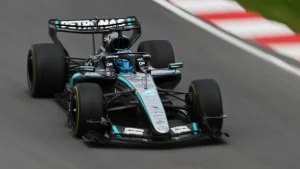
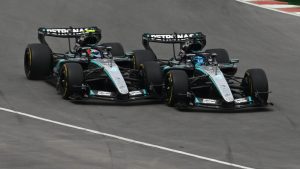
Track Limits & Penalties in Formula 1: The Rules That Keep Racing Fair
Follow F1 Explained UpdatesFollow updates
What Are Track Limits in Formula 1?
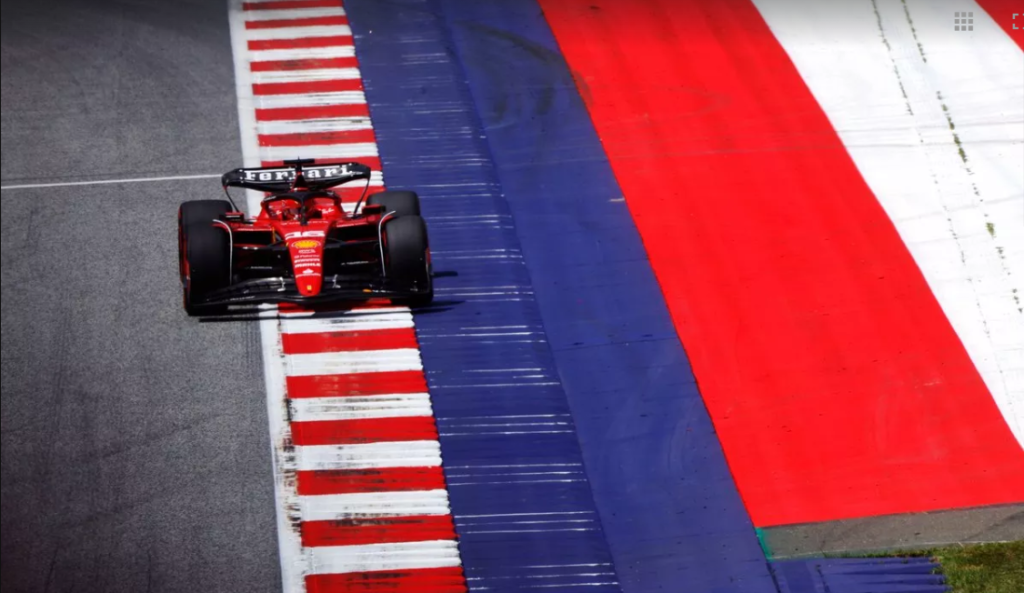
Track limits refer to the boundaries of the racing surface, typically defined by the white lines on either side of the track. Drivers must keep at least one wheel inside these limits at all times to ensure fair racing and avoid gaining an unfair advantage.
While curbs are often used to indicate the edge of the track, in most cases, crossing beyond the white lines onto run-off areas is considered a track limits violation. These rules are enforced to maintain fair competition and prevent drivers from exploiting extra space to carry more speed through corners.
How Are Track Limits Enforced?
With modern technology, track limits are monitored using:
- Cameras & Sensors – Placed around high-risk corners, these tools help race control track violations.
- Live Steward Monitoring – FIA stewards manually review incidents during a session.
- Automated Systems – Some circuits use electronic sensors to detect when a car fully leaves the track.
If a driver is found to have exceeded track limits, stewards determine whether an advantage was gained, such as cutting a corner to gain time or overtaking another car illegally.
What Penalties Do Drivers Face for Exceeding Track Limits?
Penalties for violating track limits vary depending on the severity and frequency of infractions:
-
Lap Time Deletion (Qualifying & Practice)
- If a driver exceeds track limits in qualifying or practice, their lap time is deleted. This prevents them from gaining an unfair speed advantage by using extra track width.
-
Time Penalties (Race Sessions)
- Drivers are typically given three warnings before being penalized.
- On the fourth violation, a 5-second time penalty is issued.
- If violations continue, additional penalties like 10-second time penalties may be imposed.
-
Drive-Through & Stop-Go Penalties
- If a driver repeatedly exceeds track limits or ignores warnings, stewards may escalate the penalty to a drive-through penalty (requiring the driver to pass through the pit lane without stopping) or a stop-go penalty (requiring the driver to stop for 10 seconds before rejoining the race).
-
Post-Race Time Addition
- If a track limits violation occurs near the end of the race and a penalty is issued after the checkered flag, a time penalty may be added to the driver’s total race time, which could affect their final position.
-
Penalty Points on Super License
- Excessive track limits violations could result in penalty points being added to a driver’s FIA Super License. Accumulating 12 points within a year leads to a one-race ban.
Why Are Track Limits Controversial?
Track limits remain one of the most debated aspects of Formula 1, with drivers, teams, and fans often frustrated by inconsistent enforcement. Some key issues include:
- Inconsistent Stewarding – Different races and circuits sometimes see varying degrees of enforcement, causing confusion.
- Track Design Encouraging Violations – Some tracks have large asphalt run-offs instead of gravel traps, making it easier for drivers to push beyond limits without consequences.
- Unclear Advantage – Sometimes, drivers go off track without gaining an advantage, but they still receive penalties.
To address these concerns, the FIA has been working on clearer enforcement methods, including stricter monitoring and better communication with teams.
How Can Drivers Avoid Track Limits Penalties?
- Precision Driving – Staying within the white lines while maximizing speed is a crucial skill for drivers.
- Adjusting Racing Line – Drivers must adapt their racing lines, especially in qualifying, to avoid unnecessary lap deletions.
- Team Radio Alerts – Engineers often warn drivers during the race if they are close to receiving a penalty, helping them adjust their approach.
Conclusion
Track limits are essential to maintaining fair racing in Formula 1, but they continue to be a controversial topic. While penalties help ensure competitive integrity, inconsistent enforcement can lead to debates. As technology advances, stricter and more automated policing of track limits is expected to make rulings clearer and more consistent for everyone involved in the sport.
To learn more about Formula 1, visit our F1 Explained page.
About The Author

Covering Formula 1 news, race analysis, driver stories and the bigger talking points around the sport.
Latest F1 News