Sprint Races Explained: How They Work in Formula 1
Follow F1 Explained UpdatesFollow updates
What Are Sprint Races in Formula 1?
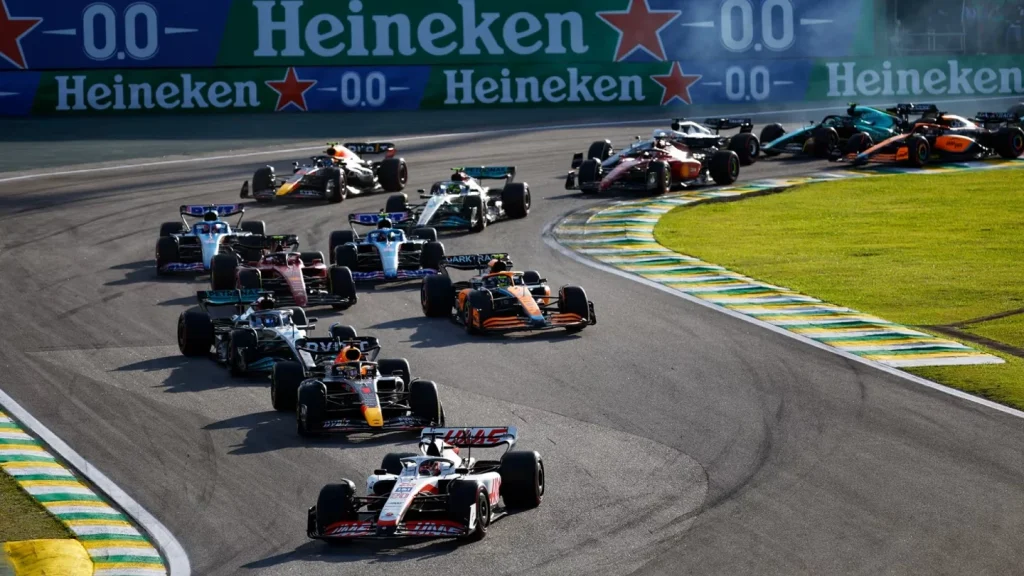
Sprint Races are a shorter race format introduced to Formula 1 to add more excitement to race weekends. Unlike traditional Grand Prix races, Sprint Races are about one-third the usual race distance, designed to deliver flat-out racing without pit stops. The results of the Sprint Race contribute to the championship standings but do not determine the starting grid for the main Grand Prix.
Since their introduction in 2021, Sprint Races have evolved, with tweaks to the format aimed at making them more entertaining for fans and fairer for teams.
How Do Sprint Races Work?
A Sprint Race weekend follows a different format than a standard Grand Prix weekend. Here’s how it works:
-
Friday: Qualifying for the Main Race
- The usual qualifying session (Q1, Q2, and Q3) determines the starting grid for Sunday’s Grand Prix.
- This replaces the traditional Free Practice 2 session.
-
Saturday: Sprint Shootout & Sprint Race
- Sprint Shootout: A shorter qualifying session exclusively for the Sprint Race, replacing what used to be Free Practice 3.
- Sprint Race: A race of about 100 km (around 17-24 laps, depending on the circuit) with no mandatory pit stops. The finishing order of the Sprint Race does not affect the grid for the Grand Prix.
-
Sunday: Main Grand Prix
- The weekend’s biggest event, run over the full race distance (usually around 305 km).
How Are Points Awarded in Sprint Races?
Unlike a full-length Grand Prix, where the top 10 finishers score points, Sprint Races reward the top 8 drivers with the following points system:
| Position | Points Awarded |
|---|---|
| 1st | 8 |
| 2nd | 7 |
| 3rd | 6 |
| 4th | 5 |
| 5th | 4 |
| 6th | 3 |
| 7th | 2 |
| 8th | 1 |
This means Sprint Races can have an impact on the championship standings but aren’t as influential as the main Grand Prix, where the winner gets 25 points.
How Many Sprint Races Are There in a Season?
F1 has gradually increased the number of Sprint Race weekends. As of 2024, there are six Sprint Races per season, held at specific circuits chosen to maximize excitement and overtaking opportunities. These tracks typically include high-action venues like Silverstone, Austria, and Brazil.
Why Were Sprint Races Introduced?
The idea behind Sprint Races was to:
- Increase entertainment: Fans get meaningful action on all three days of the weekend.
- Provide more unpredictability: With only a short session to determine the Sprint grid, mistakes are costly, and teams can’t rely on strategy as much.
- Enhance fan engagement: With another race on Saturday, there’s more to watch beyond practice sessions.
Do Sprint Races Affect the Grand Prix?
Unlike in their initial implementation (2021-2022), where Sprint results determined the Grand Prix starting grid, Sprint Races now operate independently. This means drivers can take more risks in the Sprint without affecting their Sunday race position. However, the Sprint still impacts the championship standings, as points earned can be crucial over the season.
Conclusion
Sprint Races have received mixed reactions from drivers and fans. Some love the added excitement, while others believe it takes away from the importance of the main race. Regardless, F1 continues to refine the format, and given their success in bringing more action to the weekend, they seem set to remain a part of the sport for the foreseeable future.
To learn more about Formula 1, visit our F1 Explained page.
About The Author

Covering Formula 1 news, race analysis, driver stories and the bigger talking points around the sport.
Latest F1 News