How Formula 1 Teams Use Simulators & Testing Programs to Gain the Edge
Follow F1 Explained UpdatesFollow updates
In Formula 1, where the smallest margins separate victory from defeat, simulators and testing programs play a crucial role in optimizing car performance, driver preparation, and strategy execution. With strict limitations on real-world testing, teams rely on advanced technology to extract every bit of performance possible before hitting the track.
Why Simulators & Testing Programs Matter in F1
Gone are the days when teams could test freely on real circuits before each race. The FIA has imposed strict testing restrictions to reduce costs and level the playing field. This has forced teams to turn to alternative methods, including:
- Driver-in-the-loop (DIL) Simulators – These allow drivers to practice and provide feedback on new setups before heading to a race weekend.
- Hardware-in-the-loop (HIL) Testing – A combination of software and real components to simulate real-world behavior.
- Aerodynamic Testing – Wind tunnels and Computational Fluid Dynamics (CFD) simulations are used to refine the car’s aerodynamics.
- Power Unit Simulations – Teams analyze engine performance and reliability under various conditions.
- Tyre Modeling – With limited tyre testing, simulators help drivers understand how different compounds behave over a race stint.
The Role of Simulators in Driver Preparation
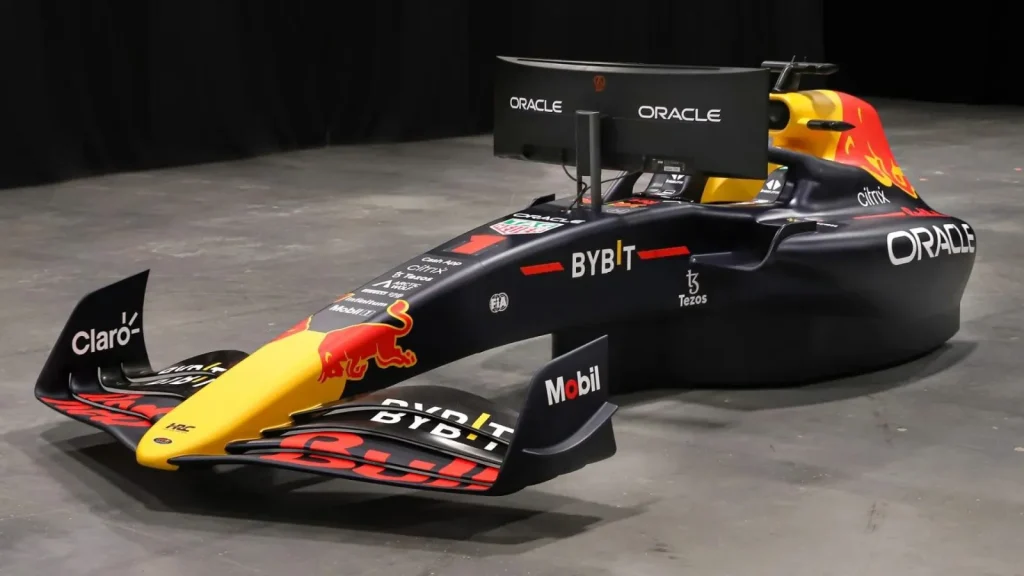
For drivers, simulators provide a way to familiarize themselves with a track before arriving for a Grand Prix. This is particularly important for rookies and reserve drivers who may not get much real-world driving time. Teams like Red Bull, Mercedes, and Ferrari invest millions into their simulator programs to help their drivers adapt to different conditions, refine their racing lines, and improve reaction times.
A modern F1 simulator consists of:
- A fully functional cockpit that replicates the car’s seating position and controls.
- High-resolution screens or VR systems that provide a realistic representation of circuits.
- Hydraulic or motion-based platforms that simulate G-forces and car behavior.
- Live data feedback to help engineers analyze a driver’s performance and car setup.
Aerodynamic & Wind Tunnel Testing
Although physical track testing is limited, teams still use wind tunnels and Computational Fluid Dynamics (CFD) simulations to refine aerodynamics. These programs allow engineers to analyze airflow, downforce, and drag before designing new parts.
Wind tunnels are restricted to 400 hours per season, meaning teams must be efficient with their development programs. CFD simulations are also limited by regulations to ensure fair competition.
The Impact of Testing Programs on Race Strategy
Before every Grand Prix, teams run thousands of simulations to predict race scenarios, including:
- Weather conditions and their impact on performance.
- Tyre degradation and pit stop strategy.
- Competitor performance models.
- Fuel consumption and power unit efficiency.
These simulations help teams make real-time decisions during the race, giving them a competitive edge when conditions change unexpectedly.
The Future of F1 Simulators & Testing
As Formula 1 embraces new technologies, we can expect simulators to become even more advanced. Artificial intelligence, machine learning, and virtual reality are already being explored to enhance testing accuracy. With continued testing restrictions, teams will depend even more on virtual environments to refine car setups and strategies.
While simulators and testing programs may not fully replace real-world track time, they have become an essential part of modern Formula 1. Without them, teams would struggle to keep up in the ever-evolving world of motorsport.
To learn more about Formula 1, visit our F1 Explained page.
About The Author

Covering Formula 1 news, race analysis, driver stories and the bigger talking points around the sport.
Latest F1 News