Why Circuit Gilles Villeneuve Is One Of F1’s Most Punishing Tracks
Follow Canadian GP UpdatesFollow updates
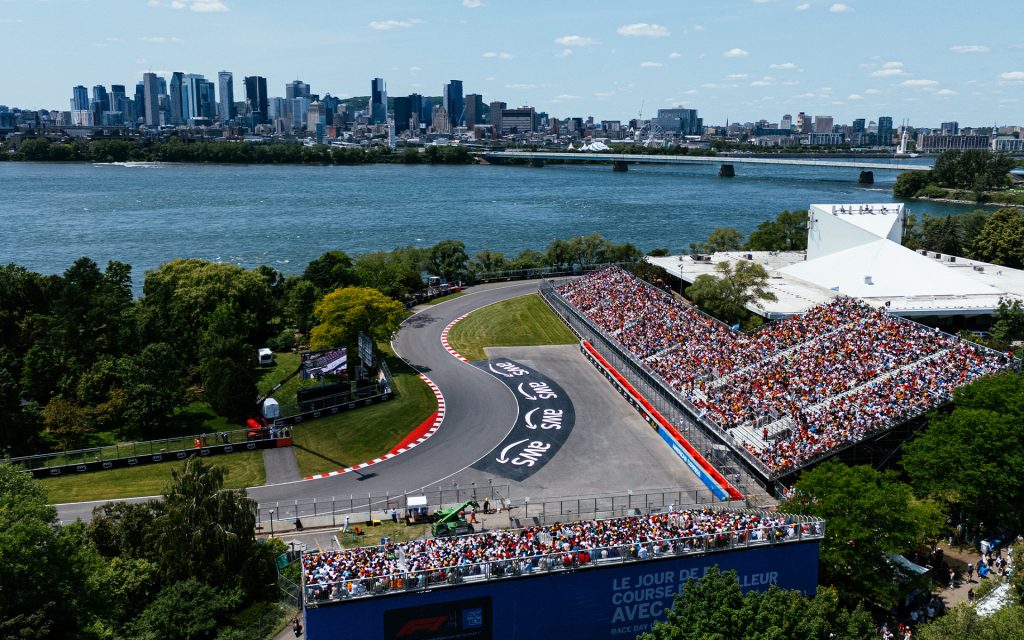
Circuit Gilles Villeneuve does not need endless corners or extreme elevation changes to create drama. Montreal’s Formula 1 circuit is punishing in a different way: it tempts drivers into attacking every braking zone, every kerb, and every wall-lined exit until one small mistake turns into a ruined lap — or a ruined race.
The Canadian GP is held at Circuit Gilles Villeneuve in Montreal, a 4.361km circuit where the Grand Prix runs for 70 laps and covers just over 305km. On paper, the track looks simple compared to some of F1’s more complex modern venues. In reality, it is one of the most demanding stop-start circuits on the calendar.
A Track That Looks Simple — Until It Bites
Circuit Gilles Villeneuve is not a traditional permanent racing circuit in the same way as Silverstone, Suzuka, or Spa. It is a semi-permanent circuit in Montreal, with parts of the venue used differently outside of race events. McLaren describes the circuit as the home of the Canadian Grand Prix since 1978, with the area around the pits reserved for racing while other parts are opened to road traffic during the summer.
That gives Montreal part of its character.
The track does not always have the same “rubbered-in” feel as a permanent circuit. Grip can evolve quickly across the weekend, especially early on. Drivers may start the weekend with a circuit that feels low-grip and uncertain, then find the track changing session by session.
That matters because Canada gives drivers very little room to build up slowly. The walls are close, the braking zones are heavy, and the kerbs invite commitment. The faster the drivers go, the smaller the margin becomes.
Why Montreal Is So Hard On Brakes
The Canadian GP is famous for heavy braking.
Formula 1’s own circuit guide describes Circuit Gilles Villeneuve as a fast, low-downforce track that is “quite stop-start”, with heavy-braking chicanes and the famous hairpin putting the brakes under real pressure.
That is one of the main reasons the track is so punishing.
Drivers repeatedly arrive at braking zones from high speed, then have to slow the car sharply while keeping it stable. If the car is nervous under braking, the lap becomes messy. If the rear steps out, the driver loses confidence. If the brakes overheat or the balance is wrong, the whole race can become a struggle.
And unlike some circuits, Montreal does not give drivers much time to relax. The lap keeps asking the same question: can you brake late, stay precise, and get back on the power cleanly?
Over one lap, that is difficult.
Over 70 laps, it can be brutal.
Kerbs Are Part Of The Lap Time
At Circuit Gilles Villeneuve, drivers cannot simply avoid the kerbs and expect to be fast.
The chicanes reward commitment. To find lap time, drivers need to use the kerbs aggressively enough to shorten the lap and carry speed, but not so aggressively that the car becomes unstable.
That is a difficult balance.
Take too little kerb and the lap time disappears. Take too much and the car can bounce, slide, or land awkwardly. In qualifying, that can ruin a lap. In the race, repeated kerb strikes can punish the car mechanically and make tyre management harder.
This is where Montreal separates confident drivers from cautious ones.
A driver who trusts the car can attack the lap. A driver who is slightly unsure may lose time everywhere.
The Wall Of Champions Is Always Waiting
The most famous part of Circuit Gilles Villeneuve is the final chicane and the wall on the outside exit: the Wall of Champions.
It earned that name after high-profile crashes during the 1999 Canadian Grand Prix weekend involving world champions Damon Hill, Jacques Villeneuve, and Michael Schumacher. Formula 1 still highlights the Wall of Champions as the circuit’s most iconic feature.
The danger is obvious.
Drivers arrive at the final chicane knowing it can make or break the lap. Attack it properly and the car launches onto the main straight with strong speed. Get greedy with the kerb or lose the rear slightly, and the wall is right there.
That is what makes it such a brilliant F1 corner sequence.
It rewards bravery, but it does not forgive arrogance.
Low Downforce Makes The Car Nervous
Montreal is also a setup challenge.
Teams usually want strong straight-line speed because the circuit has long acceleration zones and overtaking opportunities. But they also need enough stability under braking and enough grip through the chicanes.
That creates a compromise.
Run too much downforce and the car may be easier to drive, but vulnerable on the straights. Run too little and the car may be quick in a straight line, but nervous under braking and over the kerbs.
That compromise becomes even more important because Circuit Gilles Villeneuve is not just about top speed. It is about how quickly the car stops, how confidently it changes direction, and how well it puts power down out of slower sections.
A car can look quick in one part of the lap and uncomfortable in another.
That is why Montreal can shuffle the order.
Traction Matters More Than People Realise
The Canadian GP is not only about braking. It is also about traction.
Drivers repeatedly slow the car down, rotate it through a corner or chicane, then need strong drive onto the next straight. If the rear tyres are sliding on exit, the lap time suffers. If the car struggles to put power down, overtaking and defending become harder.
This becomes especially important at the hairpin.
The hairpin is one of the most important corners on the lap because it leads onto a long acceleration zone. A poor exit can leave a driver vulnerable. A strong exit can set up an attack.
That means teams need a car that is not only fast in clean air, but also stable and predictable when drivers are fighting in traffic.
Why Safety Cars Are Always A Possibility
Montreal’s layout naturally creates risk.
The walls are close, the braking zones are aggressive, and mistakes often leave cars stranded in awkward places. Even a small incident can bring yellow flags, Virtual Safety Cars, or full Safety Cars into play.
That is why strategy is so important at the Canadian GP.
A team can have a strong race plan and still be forced to react. A perfectly timed Safety Car can open the door for a surprise result. A badly timed one can ruin a race that looked under control.
This is part of Canada’s appeal.
It is not always the fastest car that has the easiest afternoon. It is often the team that handles pressure, timing, and changing conditions best.
Why The 2026 Sprint Weekend Makes It Even Tougher
The 2026 Canadian GP is also the first Sprint weekend in the event’s history, adding another layer of difficulty. Reuters reports that the 2026 race is Canada’s earliest Grand Prix and features the first Sprint race at the event.
That changes everything.
With only one practice session before Sprint Qualifying, teams have less time to understand the car, tune the setup, and prepare drivers for the circuit’s demands. On a track like Montreal, that could be a major issue.
If a team starts the weekend with poor braking balance, weak traction, or a car that feels unstable over the kerbs, there is not much time to fix it before competitive running begins.
That is why Canada could become a weekend where preparation matters as much as pure pace.
Why Drivers Love It Anyway
For all its danger, Circuit Gilles Villeneuve remains one of F1’s great driver tracks.
It gives drivers clear rewards for being brave. It asks them to brake late, attack the kerbs, brush the limits, and stay precise lap after lap. It is not a circuit where drivers can relax into a rhythm and simply manage the car.
Every lap requires commitment.
That is why fans love it too. You can see the risk. You can see the car moving. You can see when a driver is pushing. And because the lap is relatively short, small gaps can make qualifying extremely tight.
Canada often feels alive in a way that some modern circuits do not.
What Makes Circuit Gilles Villeneuve So Punishing?
In the end, Circuit Gilles Villeneuve is punishing because it combines several challenges at once.
It is fast, but stop-start.
It rewards low drag, but demands stability.
It needs bravery over the kerbs, but punishes overconfidence.
It creates overtaking chances, but also invites mistakes.
It looks simple, but rarely produces simple races.
That is why Montreal has earned its place as one of Formula 1’s most respected venues.
The Canadian GP is not just about speed. It is about control, confidence, timing, and discipline. Drivers have to attack the circuit, but never forget that the walls are waiting.
That is what makes Circuit Gilles Villeneuve one of F1’s most punishing tracks — and one of the most exciting.
About The Author

Covering Formula 1 news, race analysis, driver stories and the bigger talking points around the sport.
Latest F1 News