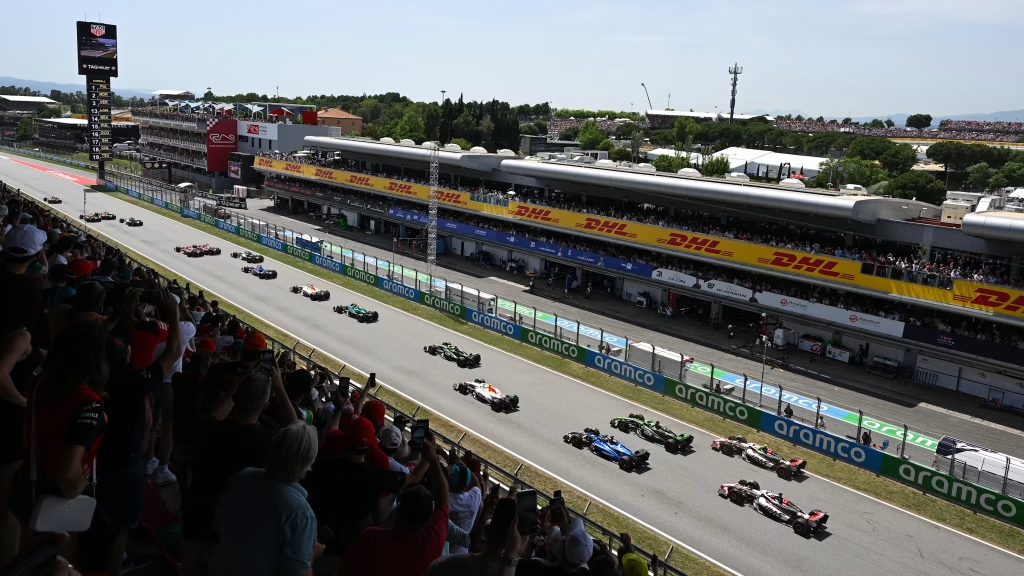
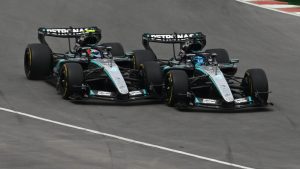
Formula 1 has confirmed a new multi-year agreement with the Circuit de Barcelona-Catalunya, ensuring that the venue will continue to host Grands Prix in the coming years.
Under the new deal, Barcelona-Catalunya will stage races in 2028, 2030, and 2032, in addition to the event already scheduled for 2026.
From this year, the race will also be officially renamed the Barcelona-Catalunya Grand Prix, giving the event a refreshed identity as it continues its long association with Formula 1.
The announcement is a major boost for the circuit, which has faced uncertainty over its long-term place on the calendar as Formula 1 continues to expand and rotate some of its historic European venues.
A Historic Venue Remains on the Calendar
The Circuit de Barcelona-Catalunya has been part of Formula 1 since the early 1990s and has become one of the sport’s most recognisable venues.
Built as part of the development programme around the 1992 Barcelona Olympic Games, the circuit has hosted many memorable F1 moments over the years.
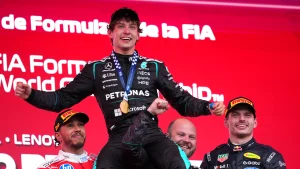
One of the most famous came in 2016, when Max Verstappen claimed his first Grand Prix victory after being promoted to Red Bull Racing. That win made him the youngest race winner in Formula 1 history and marked the beginning of one of the sport’s most dominant modern careers.
The venue has also been a successful hunting ground for drivers such as Lewis Hamilton and Fernando Alonso, both of whom have stood on the top step in Barcelona.
Most recently, the 2025 race weekend drew around 300,000 fans and saw Oscar Piastri take victory ahead of McLaren team mate Lando Norris.
Why Barcelona Still Matters to Formula 1
Barcelona has long been viewed as one of Formula 1’s most complete circuits.
Its combination of high-speed corners, technical sections, and slower-speed areas has often made it a strong test of overall car performance. For years, the circuit was also closely associated with pre-season testing, as teams used its varied layout to understand their cars before the start of the championship.
While the modern Formula 1 calendar is increasingly global, traditional European venues still play an important role in the identity of the sport.
Barcelona’s new deal shows that F1 is still willing to keep historic circuits on the schedule — particularly when organisers invest in improving the event and fan experience.
Investment Helps Secure the Future
The extension follows significant investment at the Circuit de Barcelona-Catalunya in recent years.
One of the major upgrades has been the construction of the Circuit Rooftop, a new hospitality area overlooking key parts of the track, including turns 9, 10, and 11, as well as the entrance to the main straight.
The circuit has also installed solar panels, aligning with Formula 1’s wider sustainability goals and the sport’s push to reduce its environmental impact.
These improvements appear to have played an important role in strengthening the venue’s case for remaining on the calendar.
Formula 1 is no longer only judging venues by the racing product itself. The wider event experience, hospitality offering, sustainability work, and connection to the local community all matter.
Barcelona has clearly worked to improve in those areas.
Fan Experience Becomes a Key Focus
In recent years, organisers have also placed more emphasis on the overall fan experience around the Grand Prix.
A fan festival has been hosted in Plaça de Catalunya ahead of the race weekend for the last two years, helping bring Formula 1 into the heart of the city rather than keeping the event only at the circuit.
That festival is set to return in 2026, further strengthening the connection between the race, the city, and the wider Catalonia region.
This has become increasingly important for Formula 1 as more race promoters look to create full event weekends rather than simply hosting on-track sessions.
Fans now expect more than just the Grand Prix itself. They want entertainment, city activations, access, atmosphere, and reasons to engage throughout the week.
Barcelona’s ability to offer both a historic circuit and a major city backdrop gives it a strong advantage.
Barcelona to Rotate with Spa
As part of the wider calendar structure, Barcelona’s future races will rotate with the Belgian Grand Prix at Spa-Francorchamps.
Spa is currently scheduled to host races in 2026, 2027, 2029, and 2031, while Barcelona-Catalunya will feature in 2026, 2028, 2030, and 2032.
This reflects Formula 1’s growing use of rotation deals for some European venues, allowing the sport to maintain historic races while also making space for newer or expanding markets.
For fans, it may feel strange not to have every classic venue on the calendar every season, but rotation could become one of the ways Formula 1 balances heritage with commercial growth.
A Strong Economic Impact for Catalonia
The renewal is also significant from an economic perspective.
According to the circuit’s leadership, Formula 1 generates an economic impact of more than €300 million per edition for the region.
Beyond the financial return, the event also helps promote Catalonia internationally as a destination capable of hosting major global sporting events.
That wider regional value is one of the reasons governments and promoters continue to invest heavily in Formula 1.
Final Thoughts
The new deal is a strong vote of confidence in the Circuit de Barcelona-Catalunya.
At a time when Formula 1 is expanding into new markets and placing more pressure on traditional venues to improve, Barcelona has managed to secure its place in the sport’s future.
The renamed Barcelona-Catalunya Grand Prix now has a clearer long-term path, with confirmed events in 2026, 2028, 2030, and 2032.
For fans of classic European circuits, this is welcome news.
Barcelona may not be on the calendar every year going forward, but its Formula 1 story is far from over.